
PHOENIX —Rebounding has always been at the forefront of discussions surrounding this Boston Celtics team.
At the start of the season, that discussion was a problem. Boston gave up hoards of offensive rebounds, and it was a major contributor to their 0-3 start to the year.
Fast forward to the present day, and people online have begun noticing a trend. Jake Issenberg of the First to the Floorpodcast pointed it out:
Isolating to defensive rebounding ranks for the Celtics: Oct. — 28th (64.7%) Nov. — 26th (67%%) Dec. — 18th (68.3%) Jan. — 9th (71.7%) Feb. — 1st (!!!) (74.7%) On the season — 15th (69.5%) I did not think this was possible. COY that man. https://t.co/GdDVkiJHbm— Jake Issenberg (@jakeissenberg) February 23, 2026
But he wasn’t the only one:
The Celtics, who many thought would be mediocre on the boards this season, just out-rebounded the best rebounding team in the NBA, 57-38. They now have the 6th-best rebounding percentage in the league. pic.twitter.com/2qpBXa7ph5— Taylor Snow (@taylorcsnow) February 5, 2026
Of all the things you didn't see coming...the Celtics are now 8th in the NBA in rebounding. CELTICS REBOUNDING (NBA Rank) First two months... Offensive: 7th Defensive: 30th Overall: 18th Last month... Offensive: 5th Defensive: 2nd Overall: 3rd— Sean Grande (@SeanGrandePBP) January 16, 2026
It’s been a slow, steady climb up the rebounding leaderboards, but the Celtics have reached the summit. They aren’t just a good rebounding team. They aren’t even great. Right now, the Celtics are the best rebounding team in the NBA.
Their 74.7% defensive rebounding percentage leads all teams this month. But how? What happened from the start of the season to now?
The simple answer? Hustle and luck.
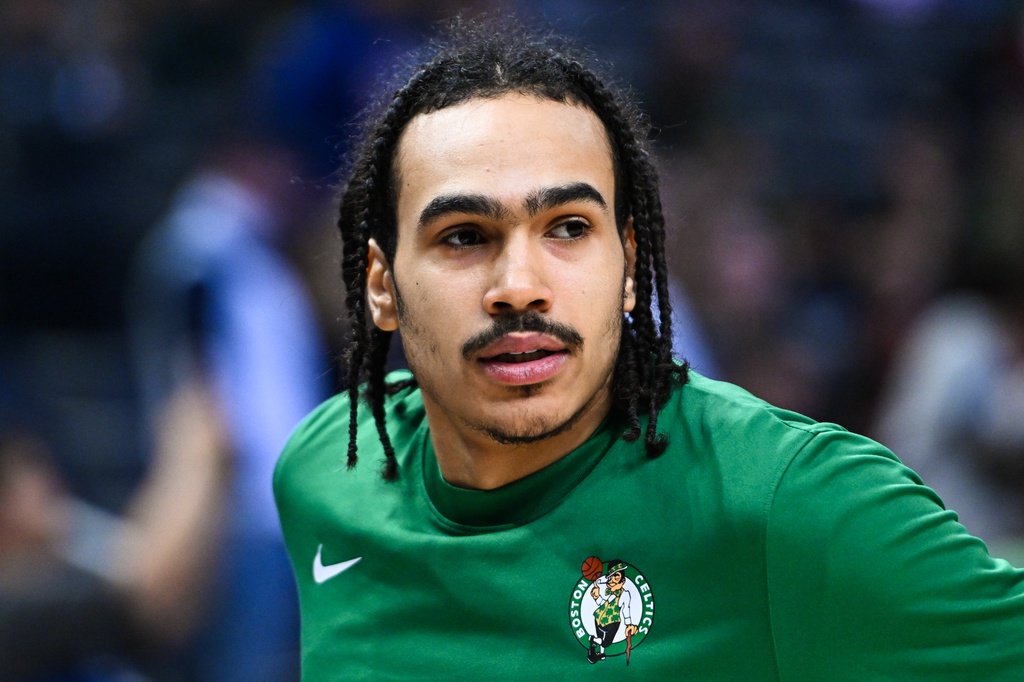
“Yeah, I think it's a conscious effort to, like Jordan [Walsh] said, just attack the ball and go get it,” Baylor Scheiermansaid at Celtics shootaround on Tuesday morning. “And then some of it's just luck. The ball bouncing your way and being able to grab it, honestly. I feel like those two things kind of play hand in hand. Obviously, you have to make a conscious effort to go and grab them, and then also, you need the ball to bounce your way a little bit.
There’s a lot that goes into grabbing a rebound. Boxing out. Marking crashers. Crashing yourself. Hustling after the ball. But luck is a huge factor, too.
A player can’t get a board if the ball doesn’t bounce their way.
But there has to be more to it than luck. The Celtics didn’t luck their way from the worst defensive rebounding team to the best. It played some part, but it’s not the whole story. So again, what changed?
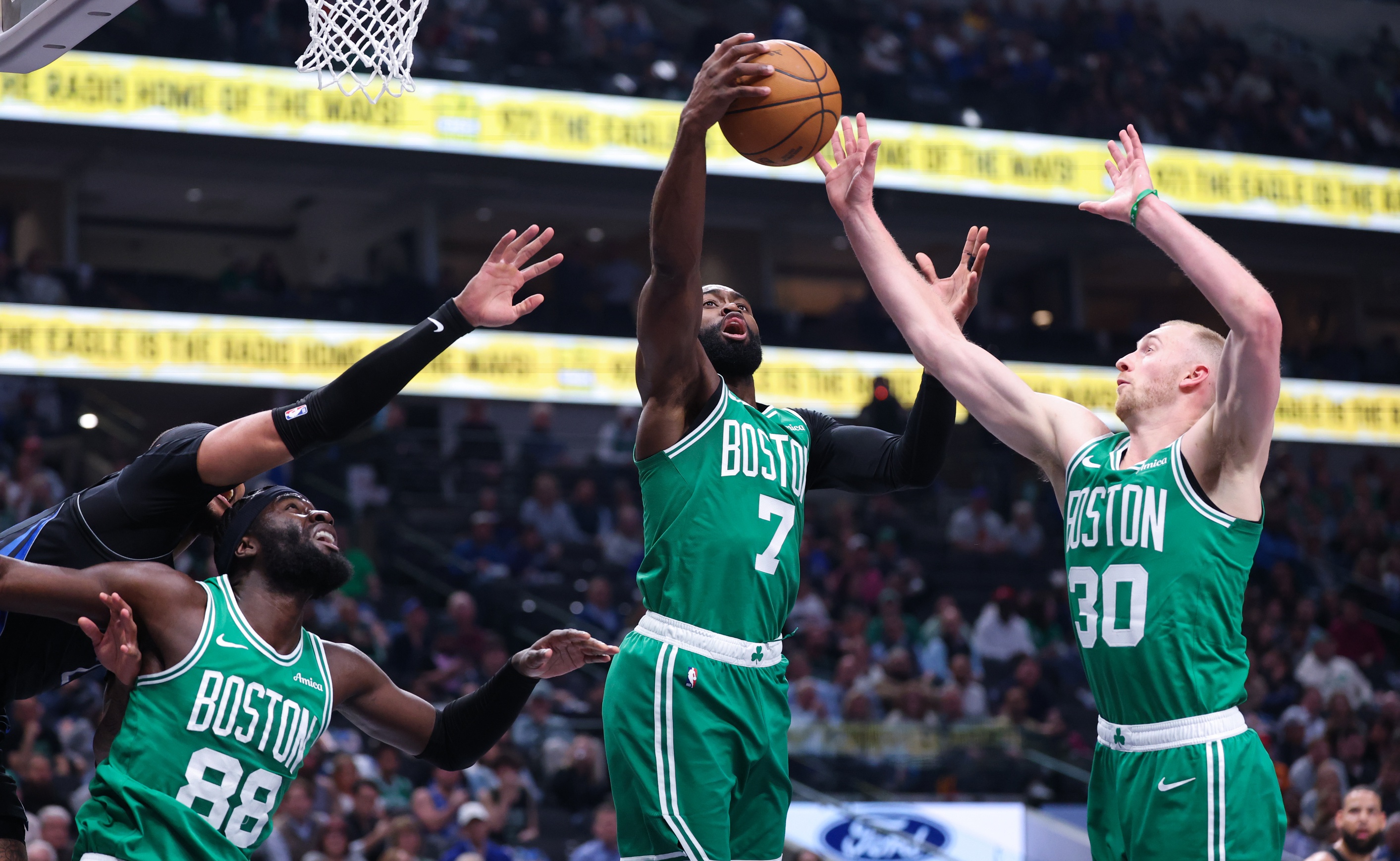
Boston’s personnel shift has helped. From the start of the season to the beginning of February, only two Celtics were averaging four or more defensive rebounds per game: Jaylen Brown (5.6) and Neemias Queta(5.1).
Now, the Celtics have added two more guys to that group, and Brown and Queta have stepped things up a notch, too. In February, Brown is grabbing 8.1 defensive rebounds per game, Queta is at 6.4, Nikola Vucevicis at 5.8, and Scheierman is at 5.5.
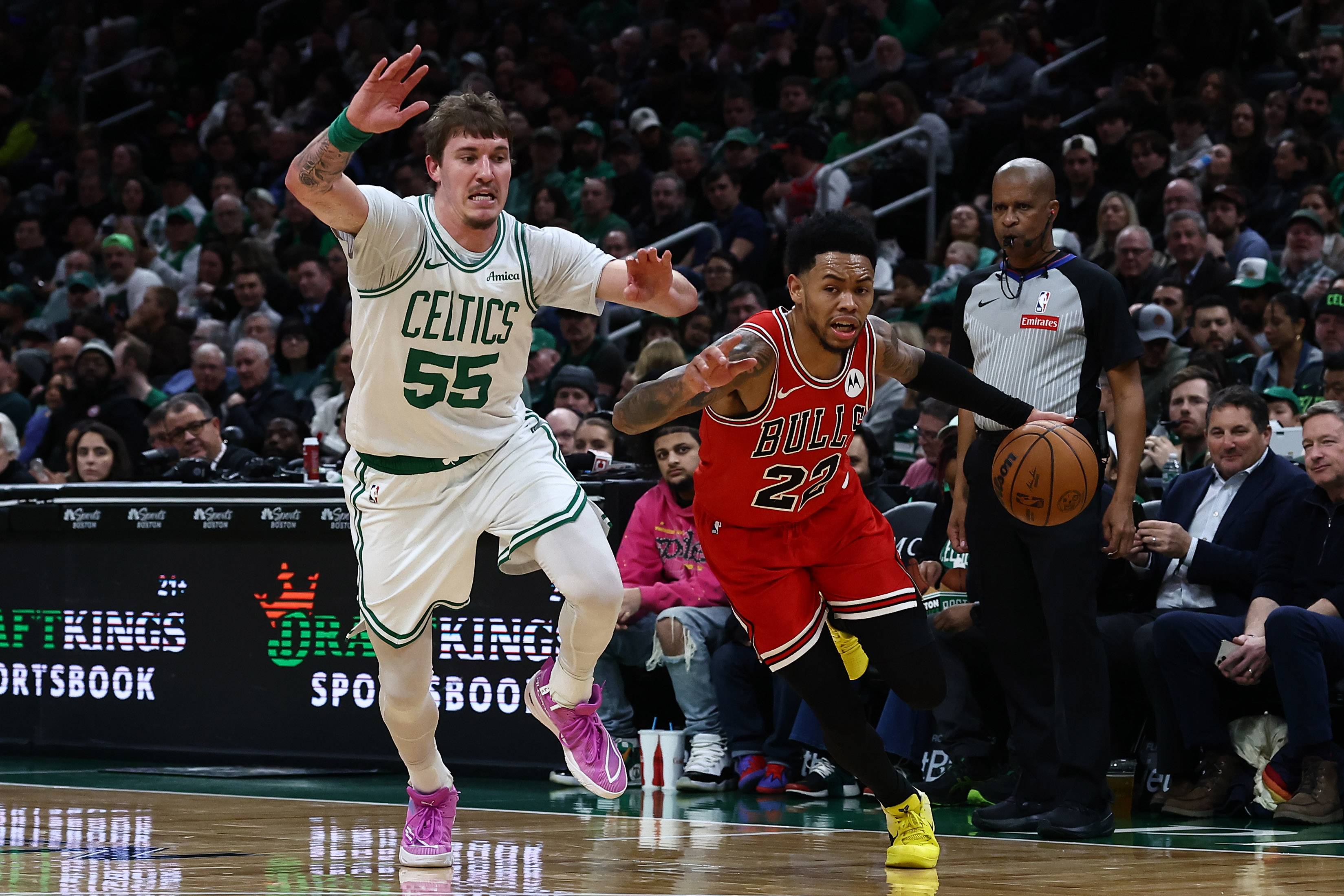
Vucevic joined Boston at the trade deadline via the Anfernee Simons trade, and since that deal, Scheierman has emerged as a regular starter for Joe Mazzulla.
Boston’s defense has also improved. They’re getting more chances to grab defensive rebounds because they’re getting more stops.
But timing, anticipation, and effort have all played a part, too.
Scheierman’s insertion into the starting lineup has given the Celtics a guy who’s always willing to fight on the glass. Every time the other team misses a shot, he’s in the paint. And if the rebound kicks out, he’ll chase it down.
Vucevic’s willingness to locate opponents, get a body on them, and hold his ground has also helped Boston’s rebounding efforts. As soon as the shot goes up here, Vucevic finds Bam Adebayo, marks him, and boxes him out. From there, it’s an easy rebound.
The Celtics’ lineups have also been inherently bigger since the Simons trade. Rather than rolling out Derrick White and Payton Pritchard in the starting lineup, with another small guard coming off the bench, they solely have White and Pritchard.
Now, their starting five looks like White, Brown, Scheierman, Sam Hauser, and Queta. Pritchard is coming off the bench, surrounded by size and athleticism: Vucevic, Hugo Gonzalez, Jordan Walsh, and Ron Harper Jr.
But here are a few more on-court differences:
White and Queta’s constant rim help often puts the Celtics at a disadvantage. Guards would drive into the paint, drawing over their defender and White or Queta, who tried to contest at the rim. That sort of situation would give the opponent a three-on-four rebounding edge.
Here, White and Queta both help on the Cade Cunningham drive, so Detroit ends up crashing more players than Boston. Jalen Durengets a tip-out.
Nowadays, when Queta or White helps over, the Celtics are better equipped to tackle that problem, as they have more height and better crashers on the floor more consistently (Simons’ minutes have been filled in by Vucevic, Gonzalez, Walsh, etc.)
But they’ve also adjusted.
Instead of also trying to contest the shot, whichever player got screened out of the action will just focus on rebounding. Like here, rather than trying to help Queta, Scheierman lets him handle the contest, and he ends up with a board.
Boston’s starting big man has also improved dramatically when it comes to actually getting up for rebounds.
When the season began, Queta would often box out, but he wouldn’t actually go up for the board. This led to tip-outs and other problems.
Now, he’s going up with two hands and getting the ball.
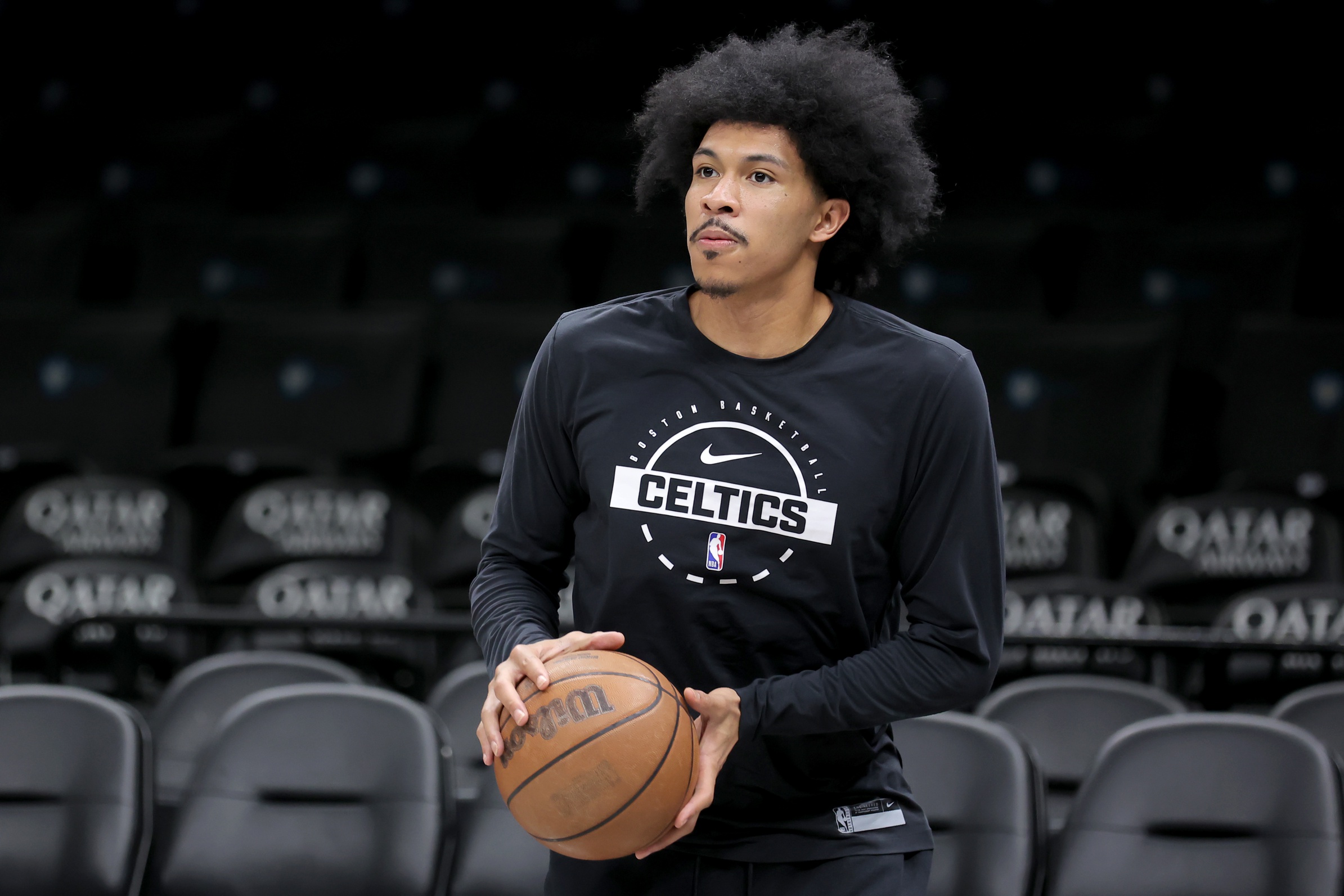
“It's tough. I think it's mostly positioning, getting there early, wedging guys in the under the rim, and going to get rebounds with two hands,” Queta said after Boston’s win over the Houston Rockets earlier this month. “I think I did a pretty good job at that tonight.
“That's an emphasis for me. I'm trying to go get it with two hands at the highest peak. And also, you got to get fortunate enough to get a couple of those. But I think mostly, it's that positioning, and then going to get it with two hands.”
Queta is also jumping at pump-fakes less, giving him more opportunities on the glass. Instead of being faked out of the play, he’s staying grounded, giving Boston another body to crash and box out with.
Speaking of boxing out, the Celtics were boxing out, but they weren’t boxing out well enough. Sometimes, this meant marking their man too far away from the rim, so they weren’t actually in position to grab a rebound.
Other times, it was a case of their opponent pushing them too deep into the paint. They boxed out, but by the time the ball bounced off the rim, they were so far under the rim that it bounced over their head.
Plus, as noted, the additional size in Boston’s starting lineup has helped with these issues, but they’ve also employed a crash-first style.
Rather than trying to mark a man and boxing him out immediately, the Celtics are rushing to the paint, then noting where their opponents are going to run in from. Position first, body contact after.
Watch Walsh, in particular, on this play.
Brown’s individual rebounding improvements have been a massive help, too.
At the beginning of the year, Brown was subject to getting beat off the ball. Opponents would sneak around him, get to the basket, and grab offensive rebounds.
Now, he’s crashing with intensity. He has a great nose for the defensive glass, and that commitment has taken Boston to another level.
But again, Scheierman is right: Luck plays a part in this.
Sometimes, the ball just doesn’t bounce your way. And there were certainly some unlucky games at the beginning of the season. But the Celtics look different now.
They’re bigger. And Mazzulla has given heavier minutes to guys that thrive on the defensive glass, headlined by Scheierman and Vucevic (again, a trade deadline addition).
And this isn’t the extent of Boston’s rebounding improvements. Behind the scenes, Mazzulla and his coaching staff may have numbers that aren’t available to the public that indicate more changes.
Maybe they’re simply crashing more. Maybe they’ve adjusted their crashing angles. Maybe they’ve just played teams that aren’t good at crashing in the month of February.
But all of these small tweaks have certainly helped, and the Celtics’ rebounding woes, at least for the time being, have subsided.
-drives-to-the-basket-during-the-first-half-against-the-toronto-raptors-at-td-garden.-mandatory-credit-paul-rutherfo-(24)-(2)-1.png)